
Beginning in 2025, a small, shifting group of scholars from across the College of Arts and Sciences meets to venture out to a location they have agreed upon beforehand. Upon arrival, they set a timer for one hour and wander, taking notes, photos, audio, measurements, whatever helps them produce a contribution to that month’s Junctures Series, the point of which is creative and interdisciplinary collaboration against our West Texas backdrop.
A list of our Junctures and their participants will appear here as they unfold.
Juncture 1:
Date/time: January 12, 2025, 4 pm.
Participants: Curtis Bauer (poet), Idoia Elola (linguist), Lucy Schiller (nonfiction writer).
Location: Stubb’s Bar-B-Que Memorial Site, 108 E. Broadway, Lubbock, TX 79403
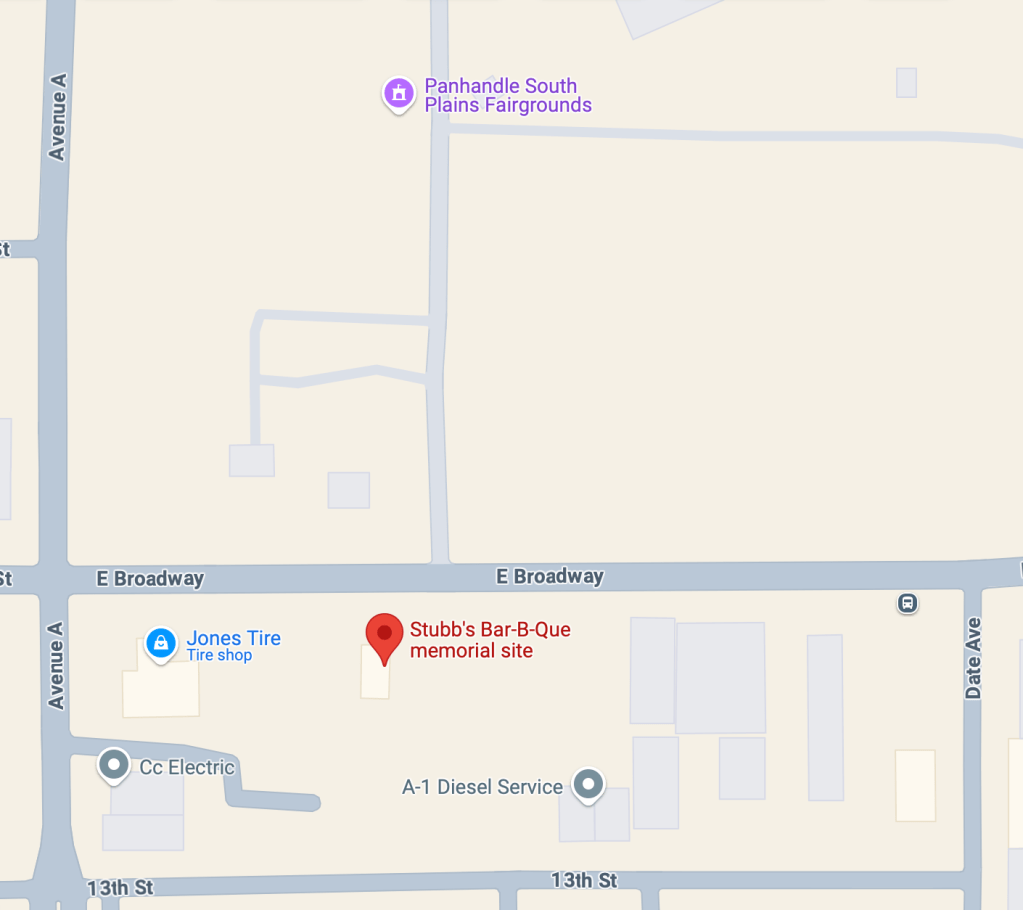
Narrative (Lucy Schiller): We arrived to the barbeque restaurant’s memorial via two cars. The site is on what some people might call the “edge” of town, but how much of an edge can it be, when the fair is held here, the train passes just a block away, and a memorial sits squarely in the site of the old restaurant and gathering spot, where, in the words of Terry Allen (who also designed this memorial), “A lot of black and white people played music with one another on the same stage for the first time at Stubb’s… a whole lot of black and white people ate food and listened to that music side-by-side for the first time at Stubb’s.” (1) That was meant to be a question, not a statement. But here is a statement: this is an important spot, and it feels like it.
Curtis suggested we position the audio recorder I brought in a kind of nestled-fashion on the windshield of one of our cars, where, ironically enough, it would catch the wind.
We caught 25 minutes of wind that day, intermixed with the occasional snatch of laughter and passing car.
What is the point of recording wind, I wondered to myself a bit, while walking the small memorial. We think of that force, which is truly a force out here, as ultimately empty: invisible, natural, bodiless. No 5-second snippet of wind would sound much different than any other 5-second snippet of wind, I thought, but that’s not actually true: a gale is much different than a breeze, and in any case, it was hard to separate this wind, today, in Lubbock, from the high winds a (long) day’s drive West, in Los Angeles, which were stoking the disastrous fires as the three of us poked around the Stubbs memorial.
This place had also been demolished by a fire, in 1980, before any of the three of us were anywhere near Lubbock (I myself was not yet alive). It’s an odd feeling—not unfamiliar; we do some version of this every day without realizing it—to walk the grounds of a memorial to something and somewhere you did not experience. That’s basically what driving down a road is, really: passing over memories that are not yours, that you may or may not be accessing. At any intentionally-visited memorial, you might not be sure what you’re looking or listening for, and you’re waiting to understand, with the help of signage, and the stirrings of feeling, why a place matters. This kind of thing is what causes people, I think, of a particular persuasion to do things like record the wind. Take photos. Glance across the highway to the old, seemingly empty Texas Highway Department building, which is its own memorial to something vaguely apprehendable but altogether unknown to me. There are old curtains up, still, in that building. I read online that it has been used as a headquarters for the South Plains Fair, the grounds of which also sit opposite the Stubbs Bar-B-Que memorial, happily visited by prairie dogs whose squeaks and trills I hoped the recorder was picking up during breaks in the wind.
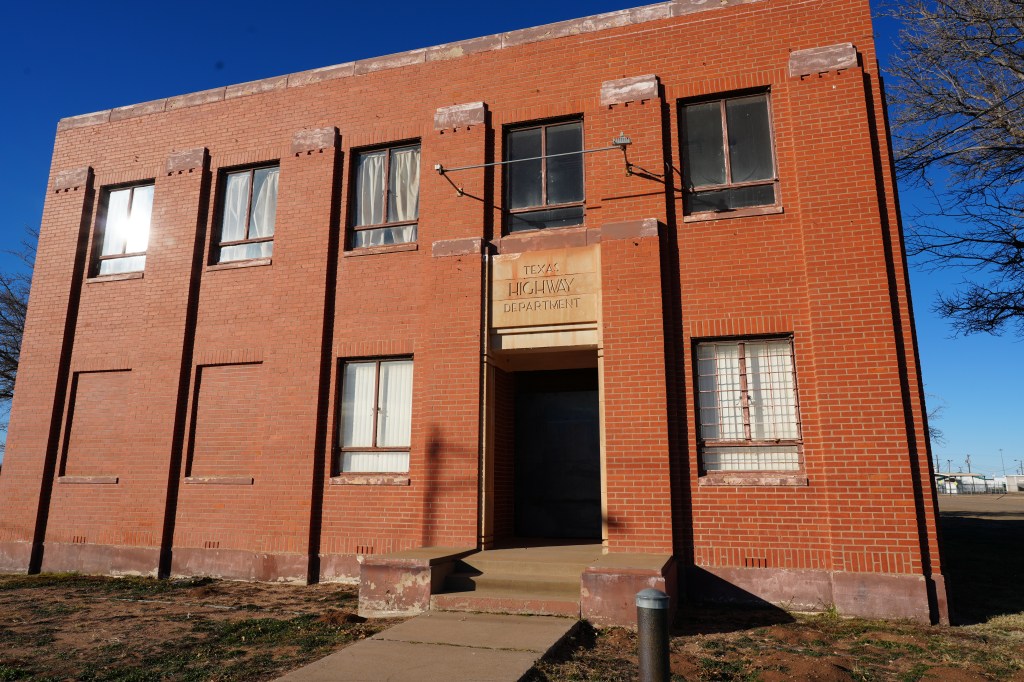
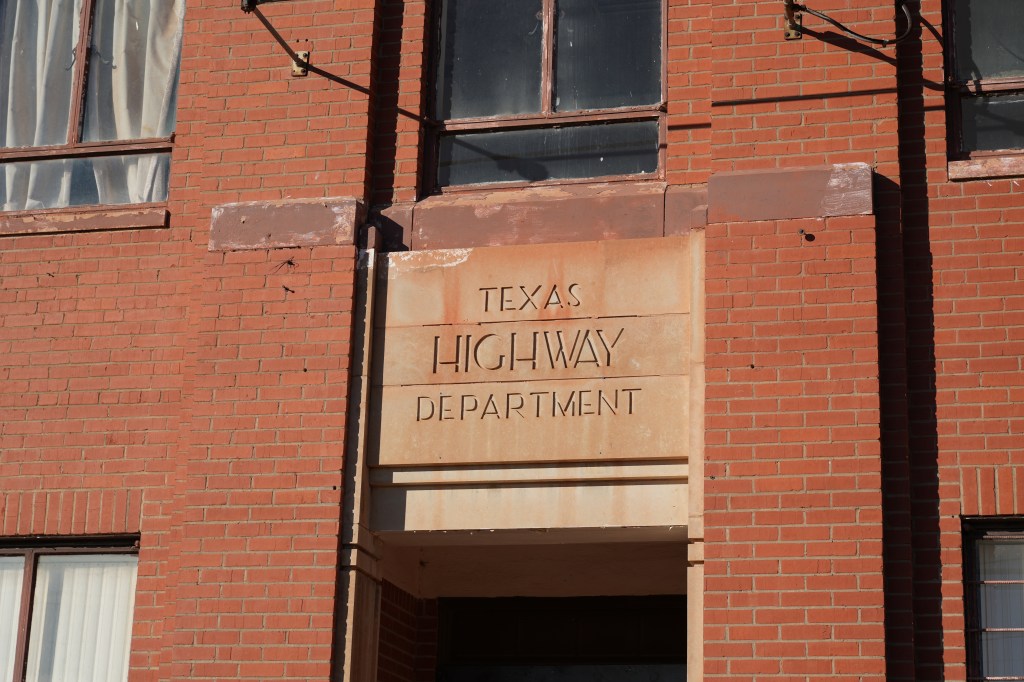
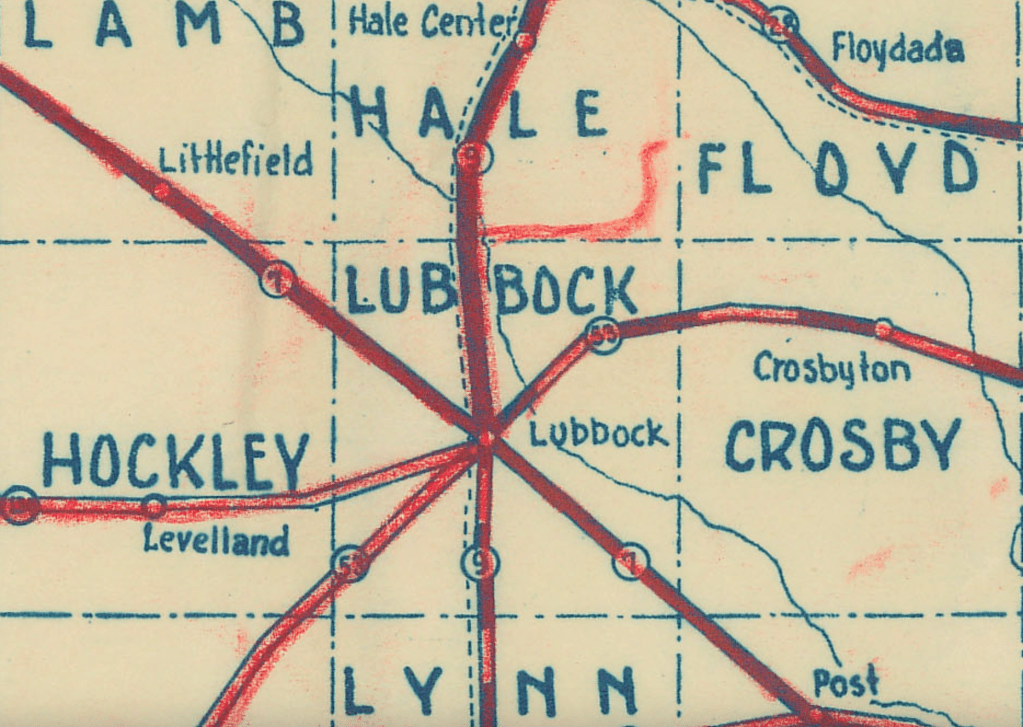
Photos by Lucy Schiller; Map from 1928 (3)
The history of Texas highways is an interesting one, booming and pausing with the overall economic trajectory of the state from 1917 (when the Texas Highways Department was founded). The first official highway project was a twenty-mile stretch of road between Falfurrias and Encino, which is, today, Highway 281. (2)
Inside the actual memorial for the restaurant, shining plaques reconstructed exactly where the jukebox had stood, where the men’s bathroom had been. The layout seemed almost wildly intimate. It is so specifically and painstakingly remembered that you realize fairly quickly how much this place meant to its regulars. They could see it, map it, in their minds’ eye, and that minds’ eye is what has recreated it for us future-visitors, who never got to go there in the first place. In this way, I suppose, it’s one of the truest, most literal, and most evocative “memorials” I can think of.
At some point I had an idea for an “anthology of wind.” The problem is, I’m a writer, and I don’t really know how to capture wind on paper: not in the evocative way that Allen was able to capture something else difficult—a beloved music spot, a person, a restaurant, a time—through this memorial. Besides, like a highway, wind is something that passes through. It shows up through what it touches: a recording device, a fire, a head of hair, a town, a pile of dust. I tend to feel that in this way, music, highways, and wind are related. They touch things and move on. I feel the relation emerge in Allen’s music, and I feel it out here, off the side of Highway 62, otherwise known as the far-out edge of Broadway.

A Poem by Curtis Bauer
On the Corner of Ave. A and East Broadway
Off it, more east than central
there’s dust the wind has
not raised. But wind. Wind
the trees can’t hold as they
could not hold their leaves.
Except one. One tree because
there’s always an exception
and reason one holds what
once were green, what once
lived and gave shade, unless
shadow is shade and there are
137 shadows here and eleven
rattles and cackles a second
like wheezed out breaths, and
wind lashes at the single weed
beside a pink straw, beside dirt
and dung and white bird drops
on the floor brick thick with names
like Dave Gentry/Coors Beer
collecting dirt, welcoming it,
like shadow welcomes, embraces
color, waiting, like a memorial is
another encounter, a reuse
of ruins that remained after the fire.
Some references:
1. http://www.virtualubbock.com/stoCSStubbMemories.html
2. https://www.dot.state.tx.us/txdot100/our-history.htm
3.https://web.archive.org/web/20120612143114/https://www.tsl.state.tx.us/arc/maps/images/map7990.jpg
 Studio E
